Kings Jewelry
The Challenge: security that doesn't feel like security
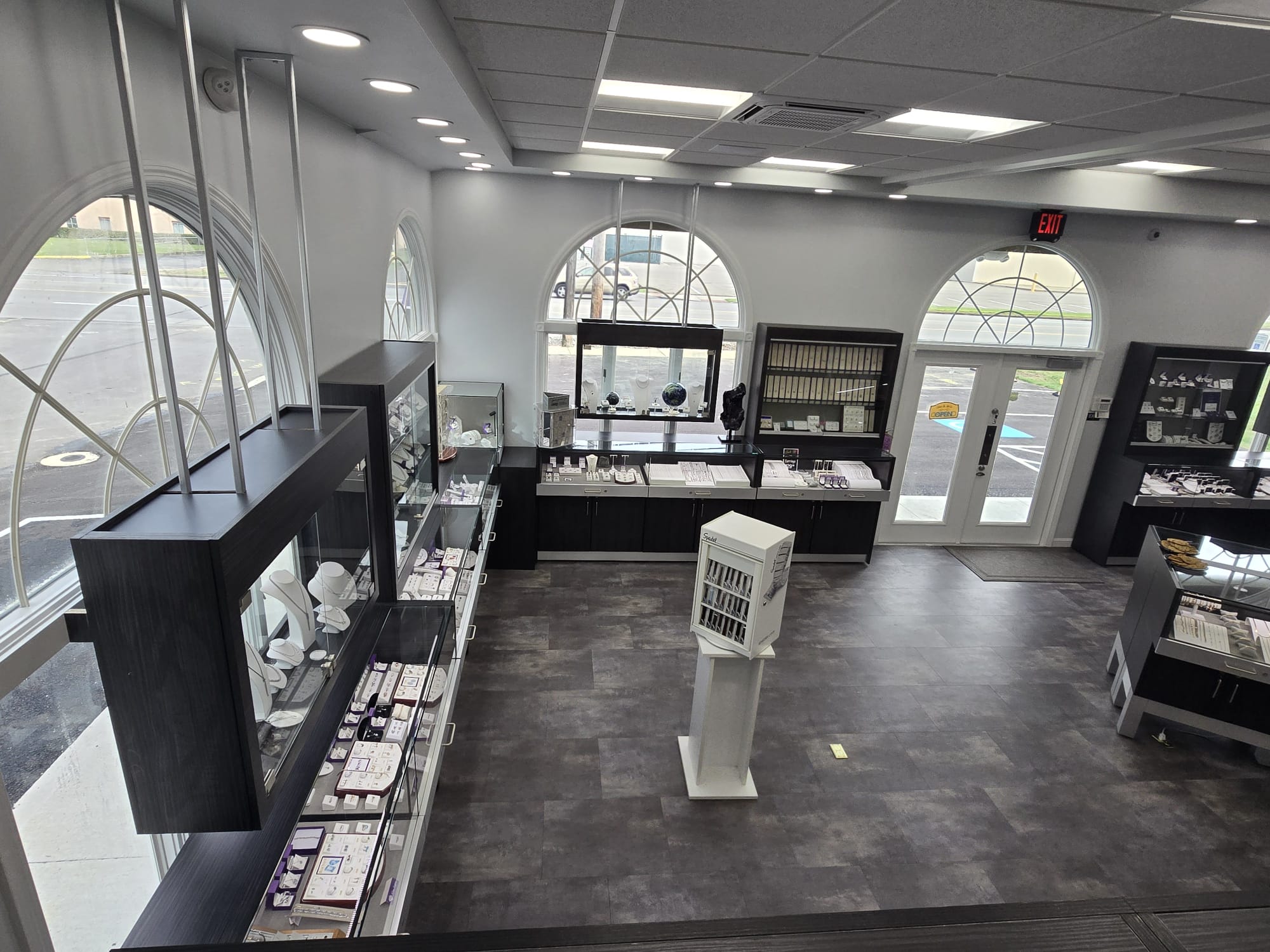
A jewelry store's casework must protect high-value inventory behind locked glass while still inviting browsing and supporting extended consultations. Kings Jewelry's space compounds that tension: large arched windows flood the showroom with natural light, which benefits the general atmosphere but washes out small, reflective merchandise when displayed against it. The casework had to manage light as carefully as it managed access. The Bricble design team developed a layout separating independent browsing (freestanding islands) from staff-assisted interaction (continuous perimeter cases), and Bricble translated that into a unified millwork system with consistent material, hardware, and lighting standards across every unit.
Signature element: the perimeter display system
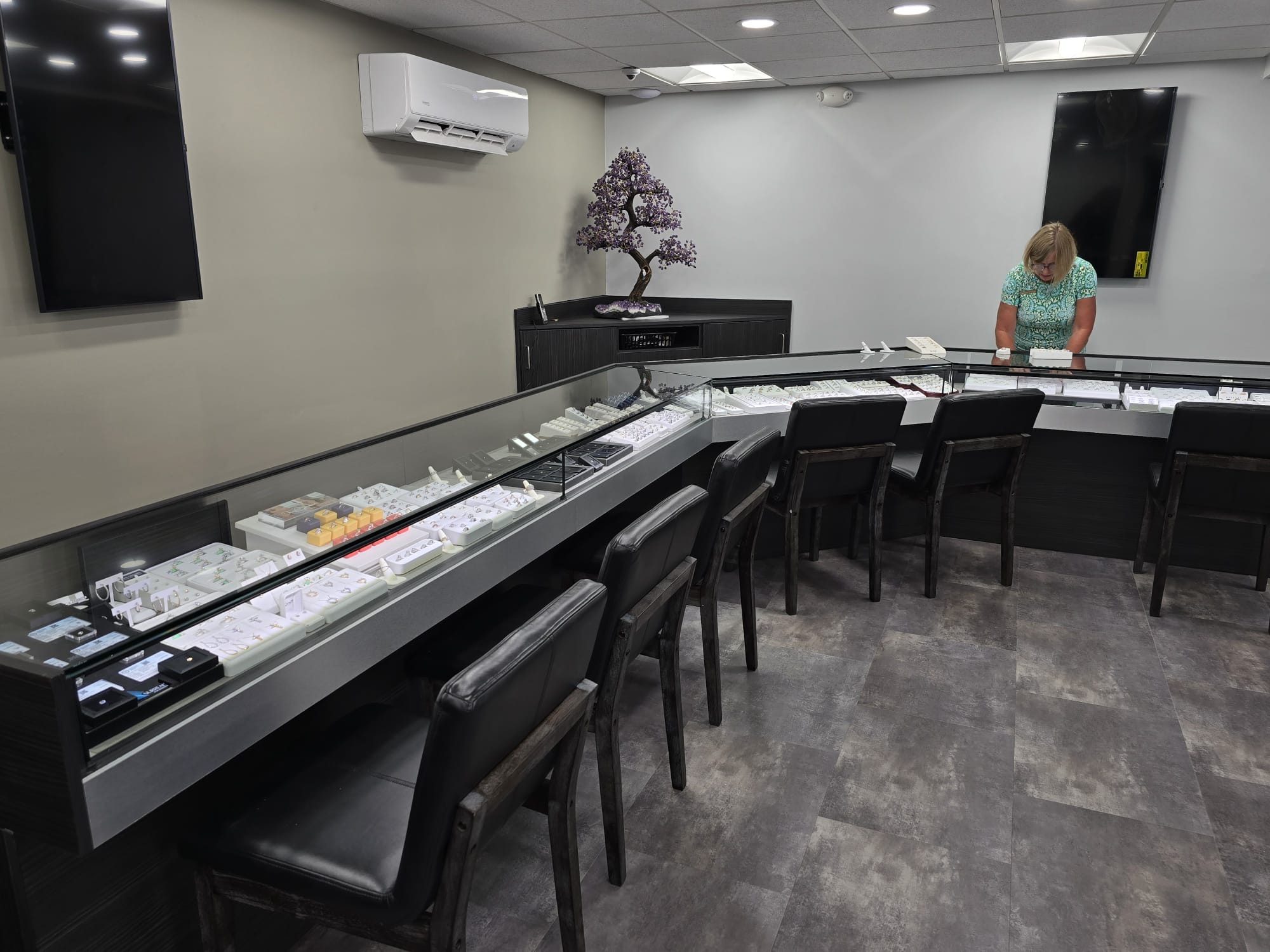
The primary casework is a continuous L-shaped run of display cases defining the showroom boundary and the staff-customer interface.
The cases are built on a dark, linear-grain commercial laminate base, selected for durability under constant contact in a high-traffic retail environment. A horizontal silver metallic reveal runs unbroken along the entire front face, dividing the mass into a defined plinth and upper display zone. This line holds consistent across straight runs, varying case widths, and the 90-degree corner transition, where an angled unit with a solid top bridges the turn without requiring complex angled glass joinery.
Each case section is topped with a clear glass vitrine. LED strip lighting is concealed within the upper front profile of each display frame, angled to illuminate merchandise from above without projecting glare at the customer's eye level. The light source is invisible from standing or seated height on the customer side, a positioning specific to jewelry retail where the goal is to light stone facets from above rather than from behind.
Scope Integration
Every element below shares the same laminate, metallic reveal, brushed stainless steel hardware, and LED lighting standard as the perimeter system.
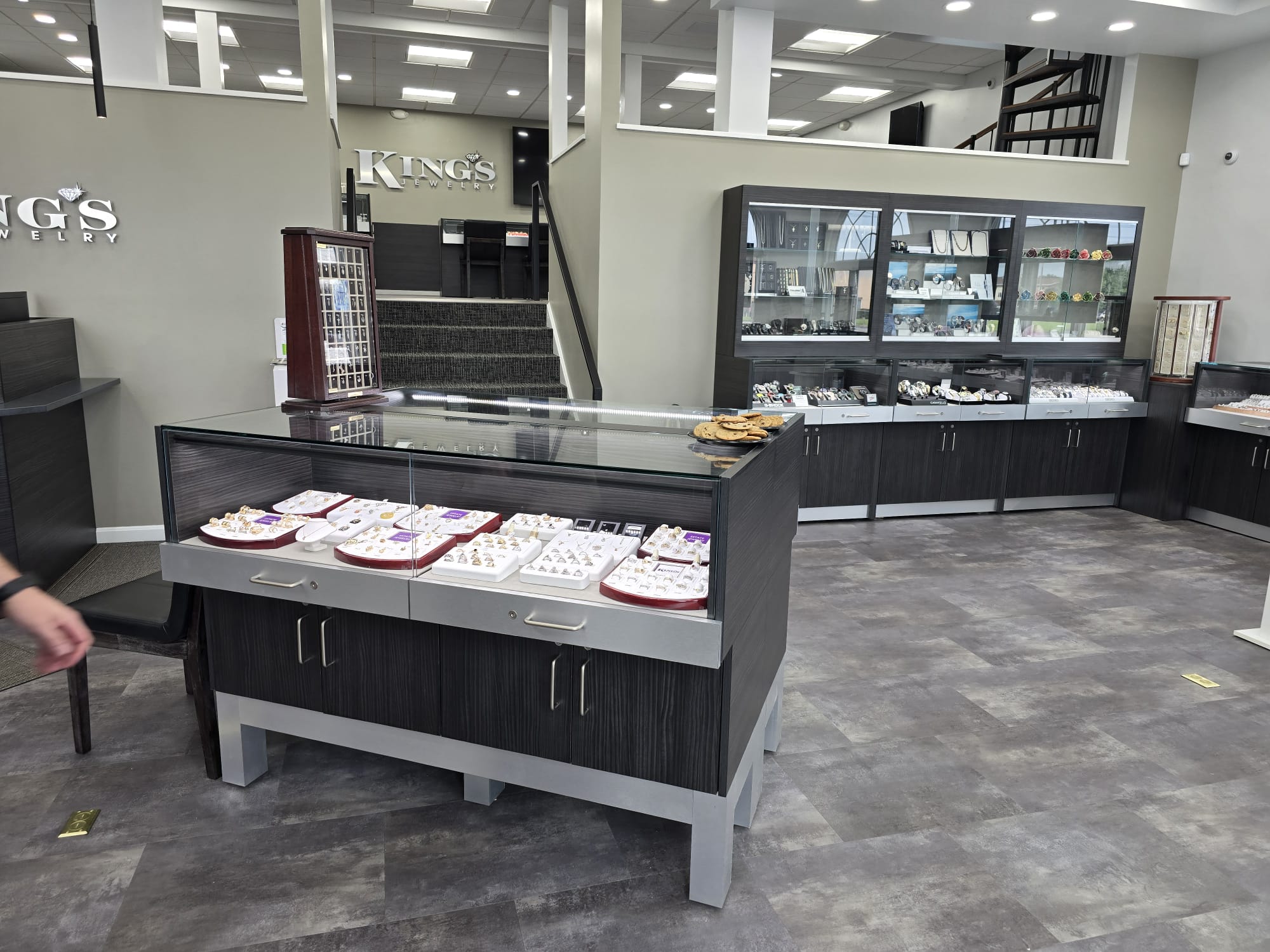
Island cases sit mid-floor on thick square metallic legs, keeping the units visually lighter than the perimeter run and allowing floor maintenance beneath. Pull-out display drawers with keyed locks sit directly below the fixed glass top, giving staff localized access without reaching over the counter.
Window displays solve the backlighting problem. Heavy, dark architectural frames positioned in front of the arched windows suspend glass vitrines at a depth that places merchandise in front of the daylight rather than against it. The dark framing anchors the small display boxes against the scale of the openings.
Hospitality station is recessed into an alcove off the main circulation path. An undercounter glass-front beverage cooler is housed within the millwork at tight clearances. A custom swinging half-gate, fabricated from the same laminate, controls staff access to back-of-house areas while reading as a continuation of the counter run when closed.
The branded wall and arrival sequence
The rear showroom wall carries dimensional silver-toned lettering with purple LED halo illumination, positioned at the top of the split-level staircase and centered on the sightline from the lower entry. A customer ascending the stairs sees the illuminated logo framed by the stairwell walls before the showroom opens around them. The consultation counter sits directly below, making the branding and primary service point a single destination.
The casework supports this spatial sequence. The counter's horizontal datum line and dark mass reinforce the symmetry that makes the reveal from stairwell to showroom work. The millwork dimensions, placement, and visual weight were coordinated to hold the composition together from the one angle every customer encounters first.