Chef's Table Restaurant
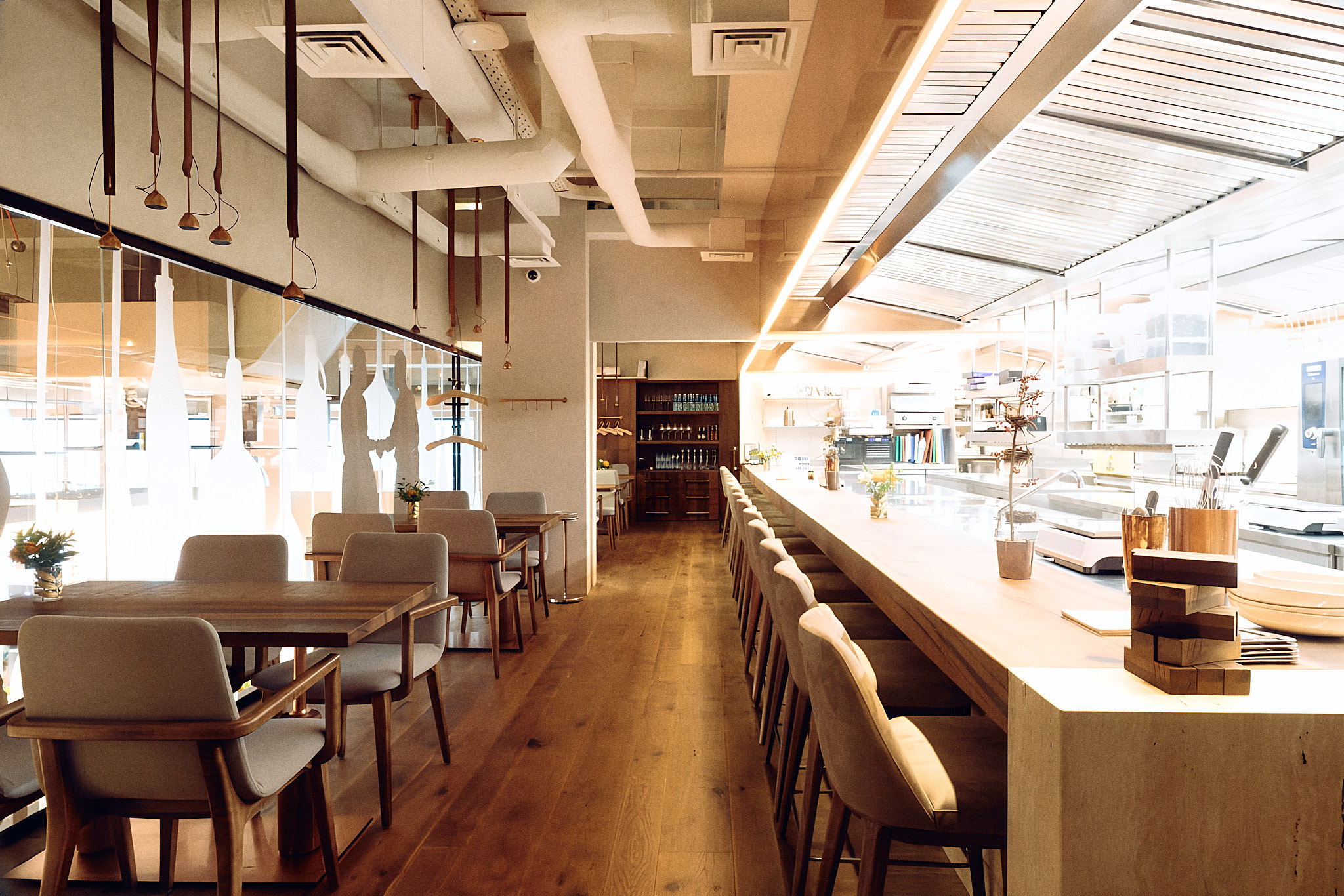
The client wanted a dining room where the working kitchen stayed visible. Ductwork ran exposed across the ceiling. Commercial refrigeration sat in guest-facing positions. The cook line opened directly onto primary seating. Nothing was to be hidden — but nothing was to feel unfinished either.
That, left Bricble with a clear fabrication problem: every piece of millwork had to carry two registers at once. The material warmth of heavy timber and handworked copper alongside the hard-edged reality of a commercial kitchen. Not one softening the other — both in the same frame, both legible.
The Communal Table
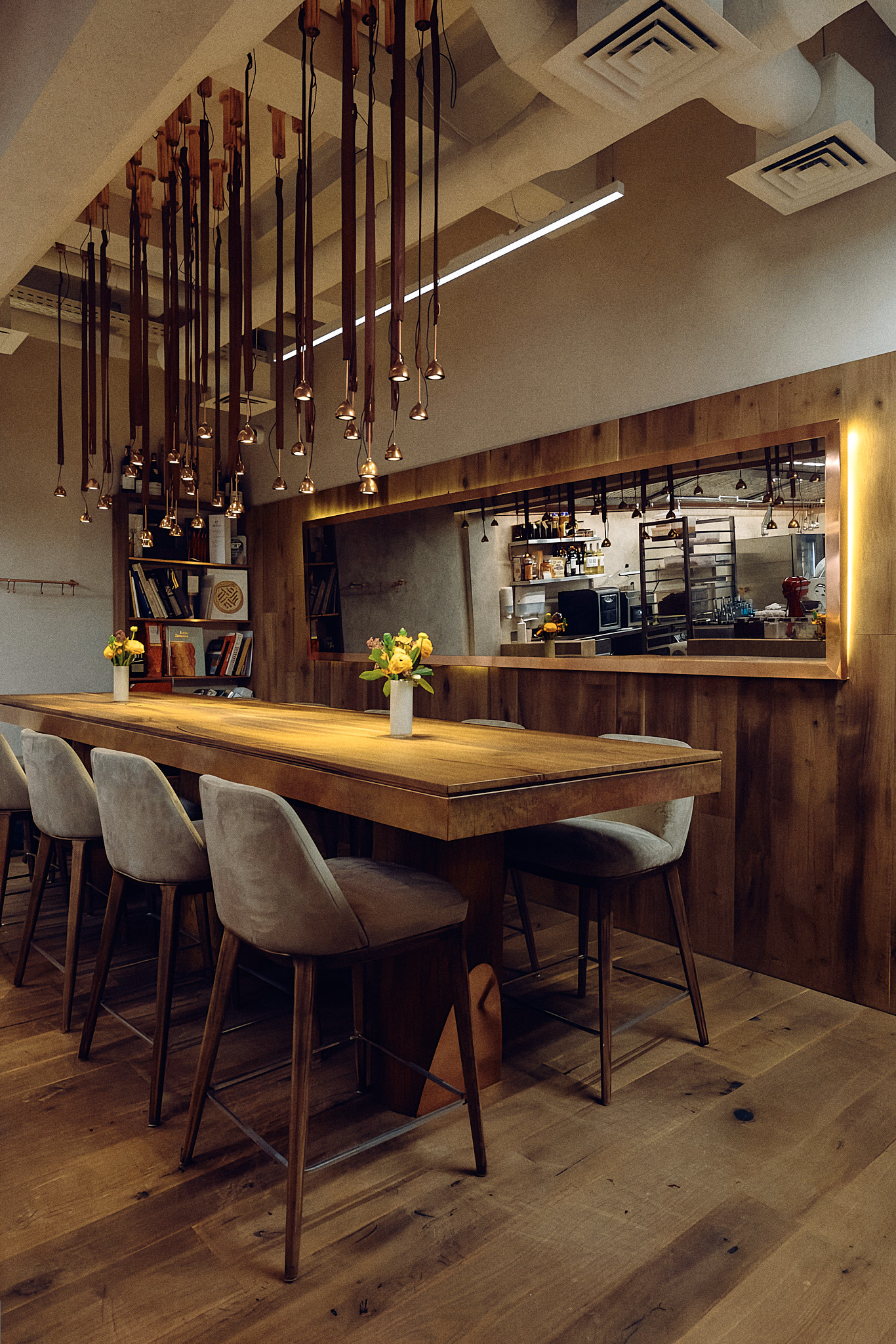
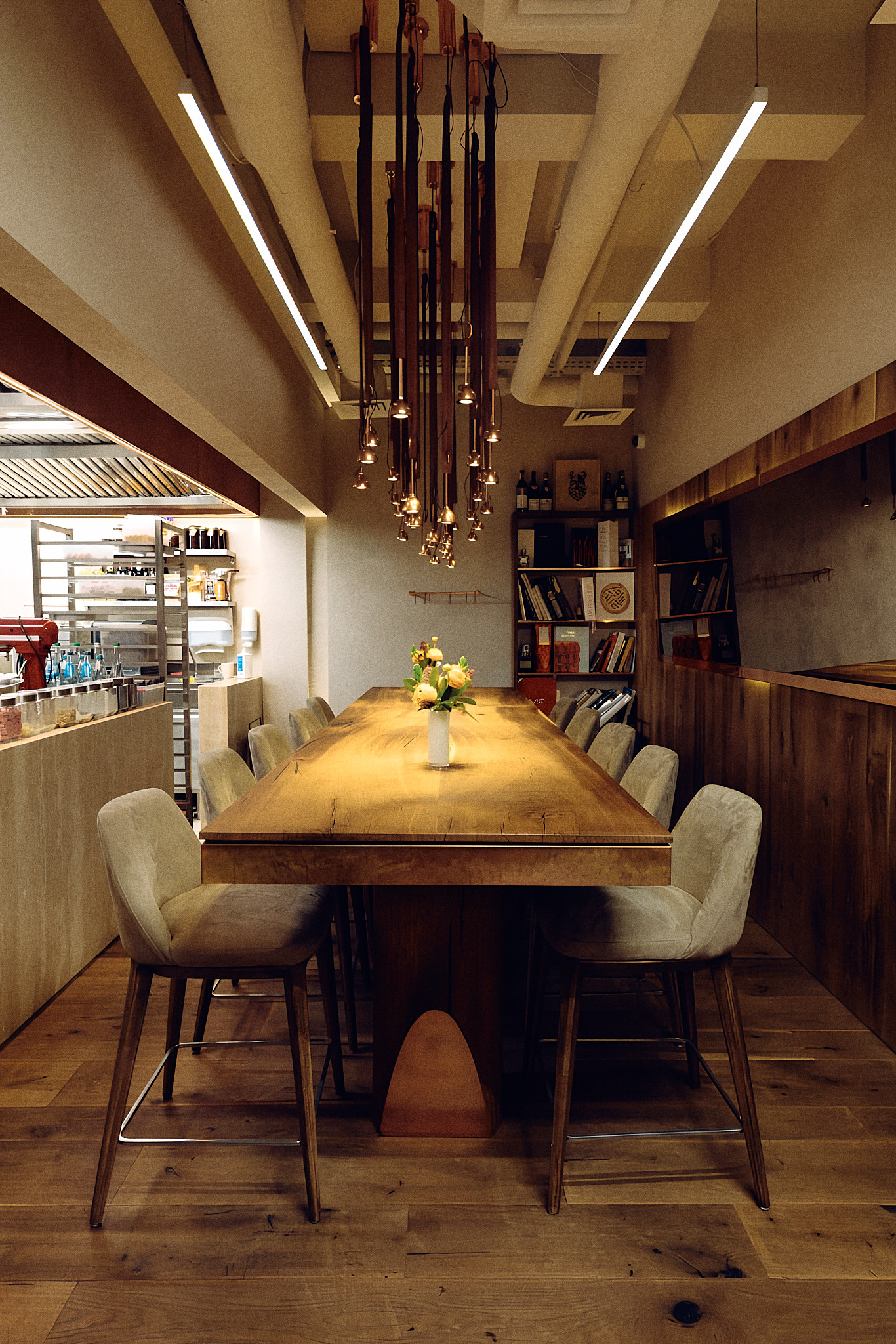
The table anchors the dining floor at high-top height, placed on direct axis with the open kitchen so that cooking and eating share the same visual field. The slab is character-grade solid wood — deep natural cracks and checking filled flush with dark resin rather than routed out and replaced. The resin arrests movement in the timber while keeping its history readable at the surface. The edge is built up to present as a single-thickness section, structural reinforcement integrated within.
A large copper-framed mirror faces the table, reflecting the kitchen back into the room and extending that sightline to every seat along the run. Above, polished copper pendants hang on stitched raw-edge leather straps with wiring left exposed alongside the suspension. The table, the mirror, the lighting — each makes the same argument: raw material, visible construction, the made object presented as made.
Scope and Integration
The service cabinetry runs the full dining wall — flush inset drawers, copper rod pulls, concealed LED task lighting beneath the top shelf, vertical grain matched across the entire frontage through sequenced sheet layout. The floor-to-ceiling pivot door is fabricated from vertical plank hardwood on floor-and-ceiling hardware, distributing the slab's mass without a traditional jamb. A wood-grip inlay handle provides proportionate purchase at the threshold scale.
At the beverage station, a solid timber frame houses under-counter refrigeration and ice units in an open bay, with a suspended stainless steel glass rack mounted beneath the top shelf. Three glass-front coolers sit on a custom hardwood plinth, timber framing capping the bank where it meets the adjacent frosted glass partition — die-cut with silhouettes of bottles and figures, dividing the floor while staying permeable to light.
A copper-framed entry mirror lettered with the restaurant name reflects the wine storage wall opposite, expanding the perceived depth of the transition space.
Materials
Copper runs the full project as the connective metal: mirror frames, table base insets, drawer pulls, pendant shades, wall hardware. Against it, hardwood in warm matte finishes and textured plaster hold the other side of the contrast. That continuity is what resolves the brief — the working and the considered share the room through a common material language, not through separation.